There’s usually a reason, and often more than one.
Changes in hormones during perimenopause, menopause or later life in men can affect desire, comfort and function.
Poor sleep, stress, certain medications, weight changes and heart health can also play a part, so Dr. Gurrala looks at the whole picture instead of treating one lab number. Erectile problems can also be an early sign of a heart or blood vessel issue, and that is worth knowing.
What patients bring up
Lower desire than you used to have
Vaginal dryness, or pain during sex
Weaker or less reliable erections
Feeling disconnected from your body
How Dr. Gurrala treats it
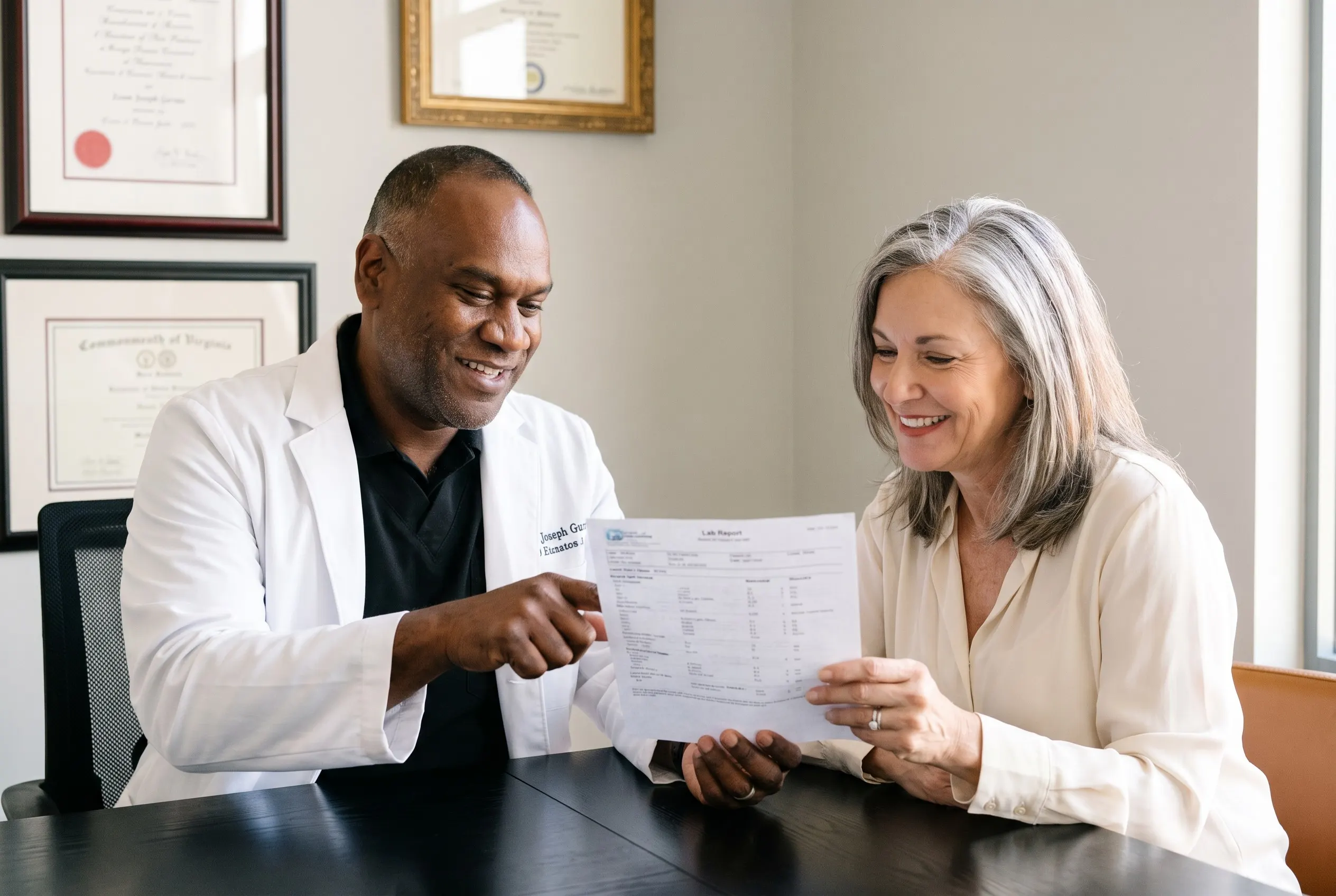
A private conversation, then a plan.
1
Talk it through
You won’t be rushed, and nothing you bring up is unusual to him.
2
Test what’s relevant
Hormone panels, thyroid and metabolic markers can show whether there’s a treatable cause.
3
Treat the cause
That might mean hormone therapy, local treatment for dryness, or changes to your sleep, weight or medications.
Questions
What patients ask Dr. Gurrala.
Can hormone therapy help low libido?
Sometimes. If low hormone levels are contributing, treating them can help, although desire is also affected by sleep, stress and relationships. Dr. Gurrala evaluates this at Delos Longevity in Sterling.
What can help with vaginal dryness?
Vaginal dryness is common after menopause and usually very treatable, often with low-dose local hormone treatment. Ask about it at your consultation.



 Find your starting point