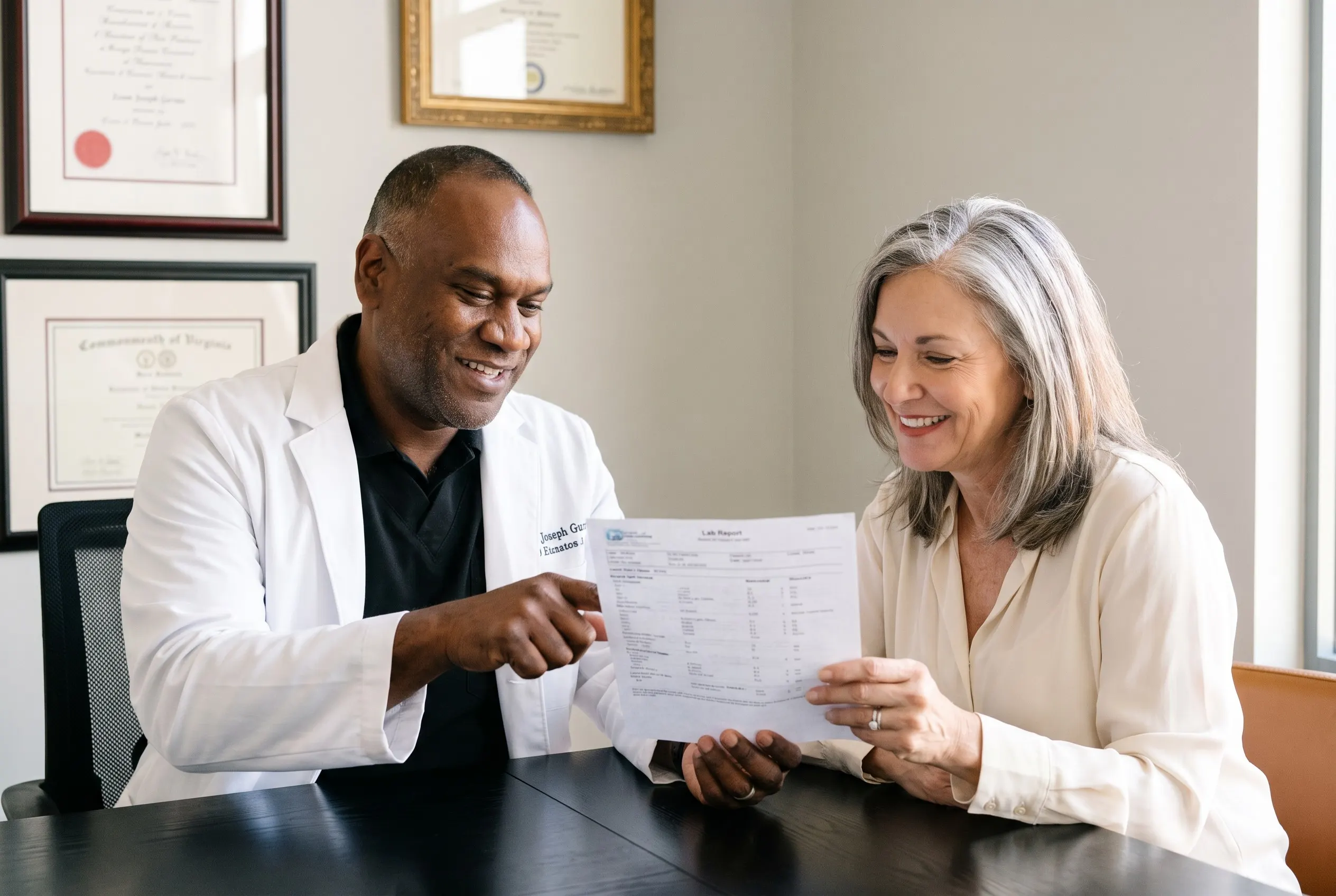
Many women were told hormone therapy was dangerous, and many doctors stopped offering it after a large study published in 2002 raised concerns about breast cancer and heart disease.
Later analysis gave a more nuanced picture. The women in that study were, on average, in their 60s, and risk depends a great deal on age, on how long it has been since menopause, on your personal history, and on the type of hormones used. For many healthy women under 60 or within about ten years of menopause, the benefits can outweigh the risks. For others, they do not. It deserves a real conversation rather than an automatic yes or no.
What a good conversation covers
Which of your symptoms hormones are likely to help
Your personal and family history
Your options, and how they differ
The real risks, in numbers you can understand
What to do if HRT is not right for you
How Dr. Gurrala treats it
Relief now, and a plan for the decades ahead.
1
A review of your symptoms and labs
Dr. Gurrala looks at what you are experiencing alongside your hormones, thyroid, metabolic and heart markers.
2
Treatment chosen for you
Options include estrogen and progesterone in different forms, bioidentical hormones and pellets. For dryness, treatment can be applied locally. He will explain why he is recommending what he does.
3
Regular follow-up
Treatment is checked with follow-up visits and labs, and adjusted over time so it continues to suit you.
4
Your long-term health
Menopause affects your bones, heart, muscle and metabolism. Strength training with Delos Fit, body composition scans and nutrition support can all be part of your plan.
Questions
What patients ask Dr. Gurrala.
What are the signs I need hormone therapy?
Hot flashes, night sweats, sleep problems or vaginal dryness that interfere with your life are the most common reasons. The decision also depends on your age and your medical history. At Delos Longevity in Sterling, Virginia, Dr. Gurrala reviews both with you and will tell you if he thinks it is not a good idea.
What is the best female hormone replacement?
There isn’t one that is best for everyone. The right choice depends on whether you still have a uterus, your symptoms, your health history and your preferences. Patches, creams, pills, injections and pellets all deliver hormones differently, and Dr. Gurrala will explain how they compare for you.
Is bioidentical hormone therapy safer?
Not automatically. Bioidentical hormones match the structure of hormones your body makes, and some are FDA-approved. Custom-compounded versions are not FDA-approved, and there is no good evidence that they are safer. Dr. Gurrala will walk you through what is known. More about bioidentical hormones.
Do you lose weight on estrogen HRT?
Estrogen isn’t a weight-loss treatment, and most women do not lose much on it alone. It may help with sleep, energy and where your body stores fat. At Delos, weight is treated directly, with nutrition, strength training and medical weight loss when appropriate.
I’m years past menopause. Is it too late?
Not necessarily, although age and time since menopause affect how much risk hormone therapy carries. Local treatment for dryness is often still an option. It is worth asking.
Important safety information about hormone therapy
Hormone therapy is not right for everyone. It may not be suitable if you have had breast cancer or another hormone-sensitive cancer, blood clots, a stroke, a heart attack, active liver disease, or unexplained vaginal bleeding, or if you may be pregnant.
Possible risks include blood clots, stroke, gallbladder disease and, with some regimens and longer use, breast cancer. Women who have a uterus and take estrogen generally also need a progestogen to protect the uterine lining. Risk depends on your age, your health, how long it has been since menopause, and the type, dose and route of treatment.
Common side effects include breast tenderness, bloating, headaches and irregular bleeding.
This is not a complete list. Treatment is prescribed only when clinically appropriate, after a medical evaluation, and is reviewed regularly. Individual results vary.
Get a straight answer on hormone therapy.
Book a free consultation with Dr. Gurrala and ask him anything you want to know.