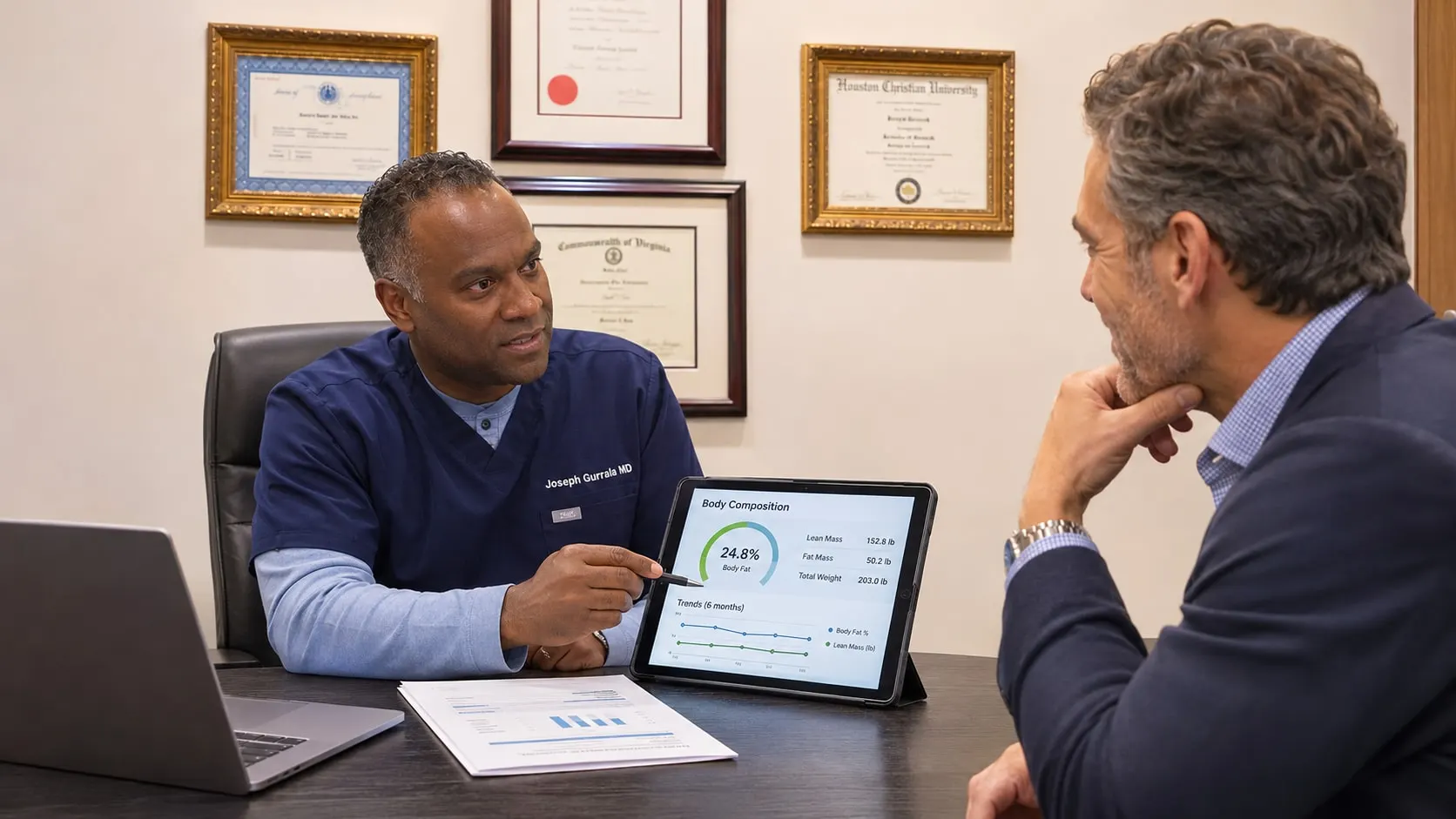
Two people can weigh the same and be in very different health.
The scale and BMI can’t separate fat from muscle. A body composition scan can, which makes it especially useful if you are on a GLP-1, training hard or going through menopause.
If your weight drops and your muscle holds steady, you’re on track. If your muscle is falling too, you and your care team can respond before you’ve lost too much.
Especially useful if you are
Taking a GLP-1 or planning to
In perimenopause or menopause
Starting a strength program
Over 40 and want a baseline for muscle
Stuck at the same weight and unsure why
What to expect
A quick scan, and a clear report.
1
Before your scan
For the most comparable readings, avoid a big meal or workout beforehand, and stay hydrated. We’ll tell you what to do.
2
The scan
You stand barefoot on the device and hold the handles for about a minute. You won’t feel anything.
3
Your report
You’ll see your fat, muscle and body water, with a breakdown by body segment.
4
What happens next
Your results feed into your plan, and repeat scans show what’s changing.
Good to know
Who shouldn’t have this scan.
Tell us before scanning if
You have a pacemaker or other implanted electronic device
You are pregnant
For comparable results
Scan at a similar time of day
Keep food, fluids and exercise consistent beforehand
Consider the phase of your menstrual cycle
Questions
What patients ask Dr. Gurrala.
What is an InBody scan?
An InBody scan is a quick, non-invasive body composition test that uses a small electrical current to estimate fat, muscle and body water. Delos Longevity offers it in Sterling, Virginia, and tracks your results over time. Start with a free consultation.
Is InBody the same as a DEXA scan?
No. A DEXA scan uses low-dose X-rays and also measures bone density. InBody uses a small electrical current and involves no radiation. It suits frequent, repeat tracking, and readings can shift with hydration, which is why consistent conditions matter.
How often should I get scanned?
If you’re on a weight-loss program, you’ll usually be scanned at each check. Otherwise, your care team will suggest what makes sense.