Patients who choose pellets usually want steadier levels and no daily creams or weekly injections.
The tradeoff is flexibility. Once placed, a pellet can’t easily be adjusted or stopped, so getting the dose right matters. Most hormone pellets are also prepared by compounding pharmacies, which means they don’t go through the FDA review that approved products do. Dr. Gurrala will go over this with you, so you can compare pellets fairly with creams and injections.
Pellets may suit you if
You have tried creams or injections and found them inconvenient
You often forget doses
You worry about a cream transferring to family through skin contact
You are comfortable with a treatment that can’t be quickly reversed
What to expect
A short procedure, with labs on either side.
1
Labs and evaluation
Dr. Gurrala confirms that hormone therapy is right for you and works out your dose.
2
The insertion
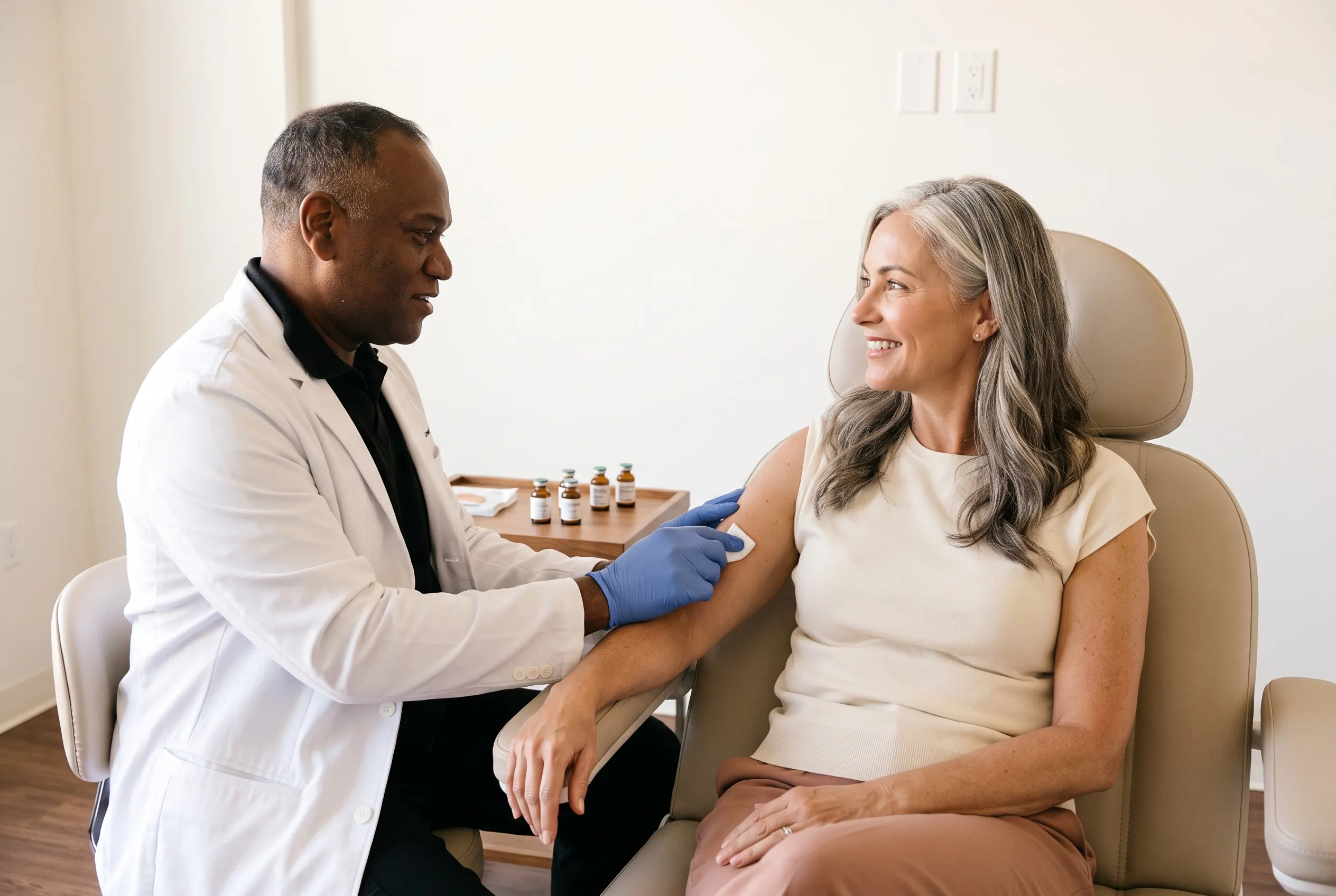
After numbing a small area, usually near the hip, he places the pellets through a tiny incision. You can generally go home right away, with some limits on strenuous activity for a few days.
3
Follow-up labs
Your levels and symptoms are checked over the following weeks and months.
4
The next round
When your symptoms and labs indicate it is time, you can choose new pellets or a different treatment.
Questions
What patients ask Dr. Gurrala.
How long do hormone pellets last?
Most last several months. Women commonly need new pellets three to four times a year, and men every four to six months, though it varies. Dr. Gurrala follows your symptoms and labs at Delos Longevity in Sterling to decide when.
Does the procedure hurt?
The area is numbed first, so most people feel little more than pressure. Soreness or bruising for a few days is common.
What are the risks of pellets?
They include bruising, infection, a pellet working its way out, and hormone levels that run higher than intended. They also carry the risks of the hormones themselves. Because pellets can’t easily be removed, Dr. Gurrala will weigh that with you before you decide.
Are hormone pellets FDA-approved?
Testosterone pellets are FDA-approved for certain men. Pellets used for women, and many others, are compounded and aren’t FDA-approved. You should ask about this for any hormone product, and Dr. Gurrala will tell you which applies to yours.
Important safety information about hormone therapy
Hormone therapy is not right for everyone. It may not be suitable if you have had breast cancer or another hormone-sensitive cancer, blood clots, a stroke, a heart attack, active liver disease, or unexplained vaginal bleeding, or if you may be pregnant.
Possible risks include blood clots, stroke, gallbladder disease and, with some regimens and longer use, breast cancer. Women who have a uterus and take estrogen generally also need a progestogen to protect the uterine lining. Risk depends on your age, your health, how long it has been since menopause, and the type, dose and route of treatment.
Common side effects include breast tenderness, bloating, headaches and irregular bleeding.
This is not a complete list. Treatment is prescribed only when clinically appropriate, after a medical evaluation, and is reviewed regularly. Individual results vary.
Ask if pellets make sense for you.
Talk it through with Dr. Gurrala at a free consultation.