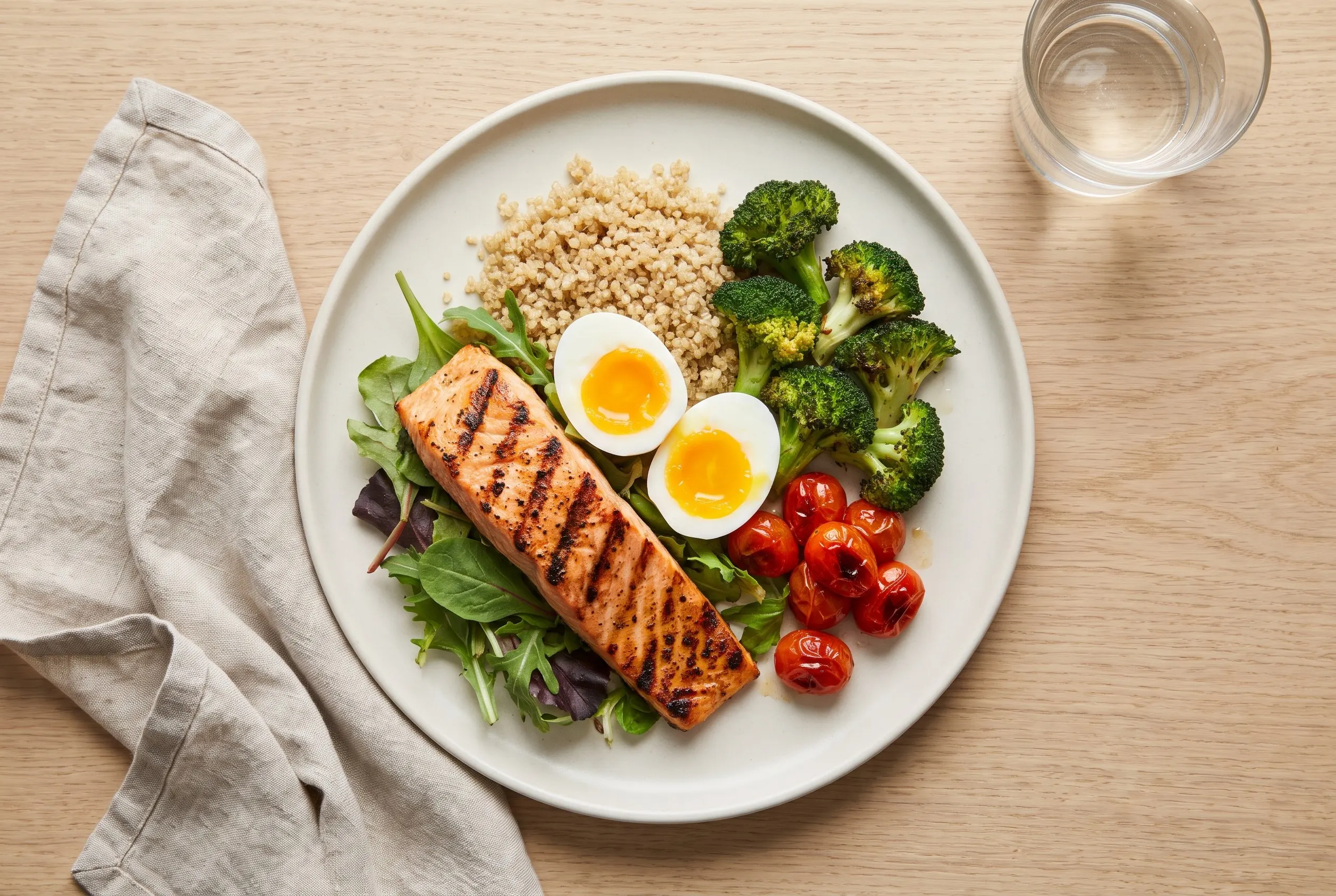
When you are eating less, each meal has more work to do.
A GLP-1 can reduce your appetite enough that protein and nutrients become easy to miss. That is one way people end up losing muscle along with fat.
Hormonal change has a similar effect. Midlife can shift where your body stores fat and make muscle harder to keep, so eating the way you did at 35 may no longer give you the same results.
What guidance can help with
Getting enough protein when your appetite is low
Staying hydrated and managing nausea
Filling gaps your labs have found
Eating around training
Keeping your results once treatment changes
How it works
Practical guidance you can follow.
1
Start with your numbers
Your labs and body composition show whether nutrient levels, blood sugar or muscle need attention first.
2
Set a protein target
Your target is based on your size, your training and your treatment, and it comes before anything else on the plate.
3
Plan real meals
Meal-planning support focuses on food you will actually eat, in amounts that work if your appetite is low.
4
Check and adjust
Follow-up scans show whether you are holding on to muscle. If not, the plan changes.
Questions
What patients ask Dr. Gurrala.
What should I eat on a GLP-1?
Put protein first at each meal, then vegetables and other fiber-rich foods, and drink plenty of fluids. Smaller, simpler meals are often easier on your stomach. At Delos in Sterling, nutrition guidance is coordinated with your treatment and your InBody results.
How much protein do I need?
It varies with your size, your age and how hard you train, and many people on a weight-loss program need more than they are getting. We will give you a specific target rather than a general rule.
Do you offer nutrition support without medication?
Yes. Nutrition guidance is part of Delos Fit, with or without a GLP-1. Medication is not required.